Further modifications were made to fatty acid oxidation. The fatty acid used by Ramakrishna, palmitate, is a 16 carbon fatty acid. Although the same enzymes are used in each cycle of the fatty acid oxidation, each cycle here is detailed. In other words, there are reactions which oxidize a 14 carbon fatty acid, a 12 carbon fatty acid, etc. This makes it possible to add other fatty acids and to incorporate amino acid oxidation into the same cycle. During certain conditions, the muscle will supplement or convert to amino acid oxidation for energy supply. The significance of these results is apparent when comparing the amount of amino acids needed to build one contractile protein complex to what is available. One would expect that AbMole 3,4,5-Trimethoxyphenylacetic acid methionine and isoleucine, respectively, should be the top two amino acids needed to increase protein flux because these essential amino acids have the largest differences between what is available and what is needed. As expected, this is also what the model shows. However, it is interesting the model then predicts that leucine and valine are the next important essential amino acids necessary at increasing the protein flux even though, based on availability differences, one would expect phenylalanine and tryptophan would be the next effective supplements. Arginine, a conditionally essential amino acid is also greater than expected in supplementation affect based on essentiality and availability differences. We obtain similar results when investigating the results in post-absorptive state. According to the rank between what is available and what is needed, methionine, isoleucine, and leucine should be the most effective, but in fact the model shows that phenylalanine and arginine are more effective. The advantage of using this metabolic modeling is being able to track the fluxes for each of the metabolites. Thus, we can predict why our results differ than what is expected if availability is the only factor. Not only is there an increase in contractile protein synthesis when relaxing the constraint on methionine, the model predicts that there is a change in how energy is produced in support for protein synthesis. As seen in Figure S1E, there is a decrease in glycolysis from glucose and a decrease in fatty acid oxidation from palmitate. Some of the energy for the synthesis process comes from increased lysine oxidation among changes in other amino acid catabolism, such as asparagine, serine, and glycine. Glutamine is predicted 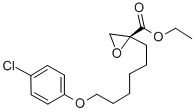 to be made in excess and transported out of the muscle tissue. This process increases the TCA cycle and the NADH shuttle to the mitochondria. Although relaxing the constraints on the other single amino acid supplementation conditions did not increase contractile protein synthesis, it did alter the metabolic profile of the network compared to the control condition. Here we will describe a few of the different profiles based on different supplementation conditions.
Author: targets inhibitor
Result from the present study providing more definitive evidence for a functional role for PPAR
Similar to other nuclear hormone receptors, PPAR d heterodimerizes with retinoid X receptor and exerts its effects via regulation of gene transcription upon binding of ligand. The best-characterized role for PPAR d to date is to regulate lipid metabolism and energy homeostasis, such as AbMole Succinylsulfathiazole inducing reverse cholesterol transport, elevating high-density lipoprotein, increasing fatty acid oxidation and energy uncoupling. In addition, PPAR d is also implicated in embryo implantation, wound healing, inflammatory response, endothelial cell proliferation, angiogenesis, skin cancer and colorectal carcinogenesis. In contrast to the well-characterized roles of PPAR d in metabolic and energetic homeostasis, the role of PPAR d in colorectal carcinogenesis remains uncertain. Some studies provide evidences that PPAR d promotes tumorigenesis while others yield conflicting results, as we previously reviewed. Recently, we successfully established the PPAR d-knockdown models of colon cancer cell lines by lentivirus-mediated RNA interfering. We found that PPAR d knockdown significantly induced less differentiation and promoted proliferation of these cells. These findings indicate that PPAR d may play a tumor suppressor role by facilitating the differentiation and inhibiting the proliferation of colon cancer. However, there still lacks of in vivo experiment to testify these in vitro findings. To more rigorously define PPAR d??s role in colorectal carcinogenesis, we examined the effect of PPAR d knockdown on the nude mice xenografts established with KM12C cells in the present study. In the present study, we found that the xenografts in PPAR dsilenced group grew significantly faster with less differentiation, promoted cell proliferation while similar apoptosis index and increased VEGF compared with those of PPAR d-normal group, regardless of bevacizumab treatment. Administration of PPAR d agonist significantly decreased VEGF expression in PPAR dnormal KM12C cells, while didn??t affect that of PPAR d-silenced cells. These findings demonstrate that, knockdown of PPAR d promotes the growth of colon cancer by lessening the differentiation and promoting the proliferation as well as VEGF expression of tumor cells in vivo, and reduces tumor sensitivity to bevacizumab. These results support a suppressor role of PPAR d in the pathogenesis of colon cancer. In the present study, our finding that the xenografts in mice grew significantly larger and heavier after PPAR d knockdown indicates that PPAR d may attenuate tumor growth in vivo. In accordance to this finding, recent studies show that the colon polyp formation was significantly greater in PPAR d-deficient mice as compared with wild-type animals. In contrast to these observations, Park et al. reported that PPAR d-null HCT-116 cells had a decreased ability to form xenografts in nude mice. Another study concluded that PPAR d is dispensable for polyp formation in the colon of APCmin mice. However, these conclusions were based on the analysis of less than 6 mice, with limited statistical power.
In asthmatic airways T cells are believed to contribute to disease pathophysiology
The financial burden of asthma in the United States is estimated to be over $10 billion. The disease is characterised by a complex of airway inflammation, remodelling and bronchial hyperresponsiveness, leading to recurring episodes of potentially reversible airflow limitation and in some patients fixed airflow obstruction. Currently AbMole 4-(Benzyloxy)phenol available therapies for the treatment of asthma are ineffective at relieving symptoms in approximately 10% of patients and offer no prospect of cure. These patients with apparently refractory disease have significant morbidity and mortality, and there is therefore an urgent need to identify better therapeutic approaches to treat asthma. Ion channels are emerging as interesting therapeutic targets for the management of asthma, particularly ion cannels that directly or indirectly facilitate the entry of calcium ions into cells. The KCa3.1 ion-channel is expressed by a wide variety of cells involved in asthma including mast cells, T cells, airway epithelial cells, fibroblasts, fibrocytes, and dedifferentiated, proliferative airway smooth muscle cells. The KCa3.1-channel is also expressed by both asthmatic and non-asthmatic ASM, and its inhibition attenuates human ASM proliferation in vitro. It is therefore possible that long term blockade of KCa3.1 is able to prevent increases in the amount of ASM in asthmatic airways. Previous studies using the sheep model have shown that 24-26 weeks of HDM challenge is sufficient to induce airway-remodelling changes typical of asthma including increases in airway collagen and ASM content. However, in the present study neither of these remodelling changes was observed, suggesting that 14 weeks of HDM challenges was not sufficient to induce structural airway changes. This raises the possibility that Senicapoc may have similar effects in this group of patients, and could offer an alternative therapeutic option for patients with relative steroid resistance. Interestingly, while there was a significant increase in neutrophils 48 hours post-HDM-challenge in both the vehicle and Senicapoc treated groups, the magnitude of the increase was tenfold higher in the Senicapoc treated group. Most of this change was due to the significant reduction in the number of neutrophils per mL in the Senicapoc group, compared to the vehicle treated group, immediately prior to HDM challenge. Endothelial cell proliferation and migration, which gives rise to the formation of new blood vessels, is induced by an elevation in angiogenic factors such as basic fibroblast growth factor and vascular endothelial growth factor and is initiated by a rise in intracellular Ca2+. Vascular remodeling is a feature of asthma, and is inversely associated with the post-bronchodilator FEV1 but not AHR. It 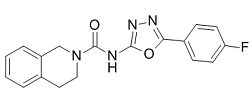 is possible that this reduced vessel calibre contributes to a reduction in airway oedema in the airways following allergen exposure, and thus accounts for some of the observed improvements in lung function.
In contrast a more even distribution of isoleucine at both the a and d positions facilitates trimer formation
Also, the present study analyzed patients with relatively less advanced PH, which makes it difficult to extrapolate the findings of this study to those with advanced PH. Further, IVS motion was evaluated using a methodology that is not commonly used. However, speckletracking echocardiography is an established method of regional analysis of IVS  motion. Indeed, the calculated intra- and interobserver reproducibility of the paradoxical IVS motion index were favorably high. Lastly, we did not conduct pathological observations in the present study. Thus, further clinicopathological studies are warranted to clarify the true mechanisms of LGE at VIPs in PH. In conclusion, the present CMR study of PH demonstrated an independent association of LGE at VIPs with early systolic paradoxical IVS motion, but not with indices of pulmonary hemodynamics and RV morphology. This suggests that LGE at VIPs is a hallmark of altered IVS motion but not of PH per se. The clinical relevance of this distinct CMR finding must be clarified in future long-term studies. As a result of its simple architecture consisting of just one type of secondary structure, the a-helical coiled coil is considered a paradigm for studies aimed at understanding the fundamental principles that govern protein stability, folding and oligomerization. Such studies have resulted in the extensive use of coiled coils for the rational design of multi-stranded structures in applications as diverse as basic research, biotechnology, nanotechnology, materials science and medicine. For example, designed two- and three-stranded coiled coils were successfully used as lead molecules to target the adenomatous polyposis coli tumor-suppressor protein implicated in colorectal cancers and to inhibit HIV infection, respectively. However, the factors that control coiled-coil folding and oligomerization are not yet well understood. Amongst such factors, “trigger” sequences are known to play an important role in coiled-coil formation. They comprise short, distinct amino-acid sequences, many of which fold into moderately stable monomeric a-helices prior to the formation of coiled-coil structures. Apparently, the function of a trigger sequence is to present key residues in a coiled coil-like conformation, which AbMole Veratramine serves as a scaffold for the recognition and in-register alignment of partner helices. Interacting helices then “zip up” along the molecule to form a stable coiled-coil structure. Several determinants that control the oligomerization state of coiled coils have been identified and studied in great detail. Major roles are played by the specific placement of hydrophobic core residues, in particular isoleucine and leucine, and their distribution generally correlates well with the oligomerization state of coiled coils. An accumulation of isoleucine and leucine residues at the heptad repeat a and d core positions, respectively, favors the formation of dimers whereas the reverse arrangement results in tetrameric structures.
SDR5C1 is sufficient to cause the accumulation of unprocessed tRNA precursors as compared to controls.
TGF b is a strong inhibitor of epithelial cell proliferation including corneal epithelial cells.The questionnaire included a section on self-reported medication use, the responses to which were used to identify participants taking angiotensin converting enzyme inhibitor medication, primarily due to high blood pressure. Height and weight were measured by research nurses, at the clinical assessment at age 63?C64 years, and BMI derived. Kidney function was assessed by estimation of GFR, with low eGFR being indicative of poor kidney function, from the fasting serum creatinine measurements recorded during the clinical assessment. Serum creatinine was divided by 88.4 to convert into mg/dL, in order to use in the GFR estimation which followed the Modification of Diet in Renal Disease equation. All of the participants were Caucasian; therefore, the race section of the equation was irrelevant. The result that a lower birth weight was significantly associated with a lower eGFR is consistent with the hypotheses put forward by Barker and Brenner and Chertow, and with previous studies in humans. Being born of a lower birth weight has been associated with a reduced number of glomeruli; the kidneys may overcompensate for this in the form of hyperfiltration, yet at a later stage of life this initially beneficial mechanism may have damaging effects. As the age of participants in the recent follow-up study was 63?C64 years, the reduction in eGFR seen in those with lower birth weights could be a result of accelerated kidney damage, due to the AbMole (R)-(-)-Modafinic acid initial hyperfiltration that Brenner and Chertow described. This initial alteration of kidney development, during fetal growth, may account for the reduced eGFR seen in this study. However, no association was found between standardised birth weight, a better measure of fetal growth than birth weight alone, and eGFR, which is contrast to some previous studies in children and young adults, although, these studies were at a much younger age than in this study. Very few of the included study members had birth weights below 2.5 kg. This may make our findings more relevant to the entire birth weight range, rather than in studies focussing on comparisons between low and normal weight births, If the mechanism is through nephron number, this is consistent with the finding of a positive correlation between birth weight and number of nephrons, across the birth weight range. The number of pre-term births in this study was very small. It is possible that a larger study with more pre-term births could see an association with prematurity and eGFR alongside, or in place of, an association with birth weight. We found different results when using crude and standardised birth weights. This is likely due to the influential adjustments for both gestational age and sex, which could be more important risk factors than birth weight alone. The sex differences seen in this study are similar to previous reports from the cohort in terms of sex differences in lifecourse predictors of chronic disease biomarkers.A modification essential for correct tRNA folding.