Hyperglycemia is not properly managed. Marine-derived actinomycetes are rich sources of novel secondary metabolites which harbour unique structures and have diverse biological activities such as antimicrobial, antitumor and immunosuppressive activities. 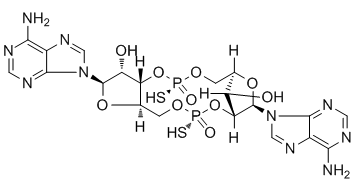 The obligate marine genera Salinispora and Marinispora have been characterized, and structurally unique and biologically active secondary metabolites have been isolated, such as salinosporamide A with excellent cytotoxicity from S. tropica CNB-392 and marinomycins A with strong antimicrobial and cytotoxic activities from Marinispora sp. CNQ-140. Marine-derived streptomycetes are also widely studied as novel antibiotic producers, where interesting compounds with antibacterial activities and anticancer activities were reported to be isolated. In our previous studies, a marine-derived actinobacterium Streptomyces xinghaiensis was identified to be a new species, which was proved to exhibit broad-spectrum antibacterial activities. However, so far no AbMole (R)-(-)-Modafinic acid sulfoxide antibiotic has been reported to be produced by microorganisms. The sulfoxide moiety presented in xinghaiamine A is unprecedented in metabolites from marine actinomycete. Sulfoxide compounds have broadspectrum of biological activities, including excellent antimicrobial, pesticidic and antitumor activities, and chemical synthesis of sulfoxide compounds also has aroused the interests of researchers. The isolation of xinghaiamine A seems to provide powerful potential to combat the emergence of multi-drugresistant microbial pathogens. In addition, compared with cisplatin, xinghaiamine A also displayed promising cytotoxic activities against a series of human cancer cell lines. Recently, the rapid development of resistance to multiple drugs in tumor chemotherapy has urged for the searching for novel drugs and the results above revealed that xinghaiamine A could be a potential clinically useful antitumor drug to combat with the increasing multi-drug resistant cancer cell lines, and the current study provided basis for further develop this novel compound for anticancer therapy. The oomycete Phytophthora capsici is a destructive fungus-like plant pathogen, which infects solanaceous and cucurbitaceous hosts including snap, lima, cucumber, eggplant, tomato, pepper, pumpkin, squash, melon, and zucchini. P. capsici has both a sexual and asexual life of cycle. Plants infected with P. capsici show various disease symptoms, such as foliar blights, fruit rots, stem and root rots. The preventive and frequent application of fungicides can limit disease expanding, but the increasing resistance of P. capsici to fungicides such as mefenoxam and pyrimorph, has been widely documented in some vegetable production regions. New fungicides aiming at different AbMole 4-(Benzyloxy)phenol targets need to be timely developed to overcome this resistance.
Author: targets inhibitor
Incidence of NAION with the highest incidence in Caucasians and the lowest in Africans
Similarly, the incidence of DM varies among ethnic groups, incidence of DM in Asia was reported to be different from other parts of the world and the size of the retinal arteriolar and venous calibers varies in different ethnicities as well. However, our meta-regression analysis revealed no significant difference of geographical area on the association between DM and NAION. That may be partly attributed to the fact that only a small number of studies from United States, Greece, Italy, Austria, UK and Israel, and none of the studies from East Asia were included due to limited availability of published literature resources. Although the Israel is in Asia, the socioeconomic status, demographic composition of the population and lifestyle are more close to that in Europe. The underlying mechanisms of the positive correlation between DM and NAION are as yet AbMole Butylhydroxyanisole unknown. Many studies found a reduced optic nerve head blood flow in the NAION patients, indicating the insufficient circulation may be the pathologic factor. Hyperglycemia can promote vasostatic perfusion deficiency by multiple biochemical abnormalities such as polyol pathway, advanced glycation end products, increased oxidative stress, activation of the protein kinase C-b pathway and angiogenic factors, resulting in cellular damage such as the vascular endothelium and pericytes, abnormal hemodynamics and autoregulation. The hyperglycemia also leads to leukostasis that predisposes to capillary occlusion.Evident by adherence to the rat tissue bed, a tumor-like gross and histological appearance, no gross or histological evidence of necrosis, identification of pockets of proliferating cells, evidence of neovascularization, and low numbers of apoptotic cells. AbMole LOUREIRIN-B Furthermore, immune staining for HLA I and CK5/6 identified the persistence of human squamous cell carcinoma. Animal models have had more extensive study and use in SCC of the head and neck, specifically of the upper aerodigestive tract. Models similar to ours show persistence of solid tumor after subcutaneous grafting, with retention of histological characteristics similar to human HNSCC. AbMole Terbuthylazine Others use orthotopic rather than subcutaneous grafting, with the advantage of more closely simulating naturally occurring epithelial cancer, but with the disadvantage of a more difficult procedure. Our group found that grafting in a subcutaneous position is highly preferable as it protects the graft from cannibalization by the host. There have also been HNSCC models using SCID rather than nude rodents, which allow for more aggressive tumor growth but which require more difficult maintenance. All animal models have limitations with regard to simulating human cancer. While our model incorporates.
Modafinil can bind to the NET and enhance LC noradrenergic activity and transmission
In the model used in the present study, we did not find histaminergic H1 receptors to be involved in the desynchronization effects of modafinil, suggesting that modafinil exerts EEG desynchronization mediated by different receptor mechanisms according to different models. The administration of either low or high doses of D2R agonist to rats that have already been treated with D1R antagonist elicits a marked 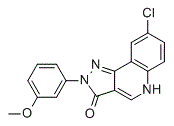 sedative response associated with EEG synchronization, and the effects can be prevented by D2R blockers. This suggests that D1R plays an important role in the mediation of EEG desynchronization. D2R KO mice have been shown to exhibit a significant decrease in the power density of nonrapid-eye-movement sleep over the frequency range of the delta activity during the dark period. However, pretreatment with D2R antagonist at doses that preferentially acts at presynaptic sites reversed the effects of low doses of D2R agonist. This suggested that the EEG synchronization induced by D2R agonist was mainly mediated by presynaptic D2R. Although modafinil is known to affect multiple neurotransmitter systems, such as catecholamines, serotonin, glutamate, GABA, orexin, and histamine, this drug increases extracellular levels of DA in the nucleus accumbens and medial prefrontal cortex. By using D2R knockout mice in combination with a DA D1R antagonist, we reported that both D1R and D2R are essential to the arousal effects of modafinil, with especially D2R being more important than D1R in these effects. The results suggested that modafinil enhances extracellular levels of DA mainly by targeting at D2R. D2R and adenosine A2AR are colocalized in the NAc. Together with other recent data, we proposed that adenosine acting on excitatory A2ARs can modulate the activity of GABAergic output neurons in the NAc to inhibit arousal and promote sleep. On the other hands, activation of the inhibitory D2R system suppresses the GABAergic neurons in the NAc to disinhibit the inhibitory actions to arousal systems and promote wakefulness. In the present study, desynchonization AbMole Miglitol models by scopolamine and reserpine are different from synchronized pattern of non-rapid-eye-movement sleep. We found that D1R might be more important than D2R in the mediation of modafinil-induced EEG desynchronization. In addition, a1-adrenoceptors are also involved in the response. Adrenergic signaling in the CNS plays a prominent role in the AbMole Trihexyphenidyl HCl timing of sleep states and in the regulation of changes in EEG. a1-adrenoceptor agonist and a2-adrenoceptor antagonists, which increase noradrenergic transmission, induce a decrease in delta power and promote wakefulness. A wealth of pharmacological data demonstrates the necessity of adrenergic receptors in the response to modafinil.
Blockage of cholinergic and noradrenergic activity provided a useful and valid model of the EEG synchronization
The model has been used to evaluate the desynchronization effects of the acetylcholinesterase inhibitor tacrine, which is used in the treatment of Alzheimer’s Disease. In the present study, we used mice treated with cholinergic receptor antagonist scopolamine and monoamine depletor reserpine as a model of EEG synchronization, mimicking the nature and progression of pathological EEG synchronization to evaluate EEG desynchronization effects of modafinil. To date, modafinil has only been shown to bind directly to the DA transporter and the NE transporter, but no apparent specific binding to other monoamine or neuropeptide receptors/transporters has been reported. We hypothesized that modafinil may exert EEG desynchronization by acting on the noradrenergic and dopaminergic transmission system. The present experiments showed that modafinil reversed the slowing of the EEG caused by the 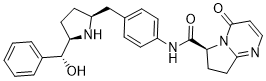 anticholinergic scopolamine and the monoamine depletor reserpine. The EEG desynchronization effect of modafinil is mediated by adrenergic a1 and DA D1 and D2 receptors. Increases in the delta power spectra were here taken as indicative of synchronization while EEG activation was taken as indicative of desynchronization. Desynchronization consisted of blockage of the slow, high-AbMole Corosolic-acid amplitude waves in the present study. Cortical neuronal activities are under the control of cholinergic, dopaminergic, and noradrenergic modulatory systems. Loss of cholinergic and monoaminergic inputs to the cortical mantle can result in slowing of the EEG and loss of desynchronization. It has been reported that increases in the amplitude of all three frequency bands is roughly the same in rats given either 1 or 5 mg/kg scopolamine. In the present study, we used reserpine 10 mg/kg and scopolamine 2 mg/kg to produce a AbMole LOUREIRIN-B reliable loss of low-voltage, fast-wave activity in mice to mimic EEG synchronization. Our results showed that modafinil reversed the slowing of the EEG, decreased the power density of the delta power spectra, and increased the power density of higher-frequency waves, as in previous reports. The study raised the possibility that modafinil may be used to treat diseases with abnormally synchronized activity. The importance of the role of EEG synchronization in modulating epileptiform abnormalities has also been observed in various forms of epilepsy. High-frequency stimulation, such as deep brain stimulation has been found to significantly decrease generalized tonic-clonic seizures via EEG desynchronization in animals. This has been successfully applied in therapy for epileptic patients. We have shown that modafinil exerts a dose-dependent antiepileptic effect mediated by adrenergic a1 and histaminergic H1 receptors but not by the adrenergic a2 receptor or dopaminergic D1 or D2 receptors.
The above all may underestimate the association between DM and NAION
SCNAs, including oncogenes and oncosuppressor genes associated with the development of HNSCCs in HPV-negative patients, but did not affect TP53 mutations, which is a novel finding. In contrast, smoking raised the risk of TP53 mutations, which is consistent with Brennan’s report, but did not affect SCNAs, which also represents a novel finding. Smeets et al. reported that oropharyngeal cancer patients with AbMole 2,3-Dichloroacetophenone hardly any chromosomal aberrations had significant associations with non-alcohol drinkers, which is consistent with our results. Of interest, heavy drinking but not moderate drinking had significant effects on the induction of SCNAs. On the other hand, the TP53 mutation risk was increased in smokers and was not always significant in heavy smokers with more than 20 pack-years. According to Hashibe’s report, alcohol consumption was associated with an increased risk of HNSCCs only when consumed at a high frequency, suggesting a threshold model, whereas even a small amount of smoking raised the risk, suggesting a stochastic model of carcinogenesis. Among the HPV-negative patients, ERBB2 gene amplification occurred only in moderate and heavy alcohol drinkers. In a murine model, ERBB2 expression was increased in alcohol-exposed mucosa, dysplasia, and invasive oral carcinomas, which may support our results. Concerning esophageal and breast cancer, in both of which alcohol consumption is a risk AbMole Pamidronate disodium pentahydrate factor and ERBB2 gene amplification was reported. Heavy alcohol consumption may trigger previously known and unknown SCNAs, but may not induce TP53 mutation.One study included 2 independent substudies, in which the controls were chosen from different population. To the best of our knowledge, this is the first meta-analysis investigating the association between DM and NAION. The results of our meta-analysis showed that relative to non-diabetes controls, individuals with DM have increased risk of NAION. Sensitivity analysis indicated that our statistical results are robust and are unlikely to be due to AbMole Miglitol publication bias. Due to the high incidence and prevalence of type 2 diabetes, and both NAION and type 2 DM mainly affect the elderly, it is reasonable to assume that the majority of DM patients with NAION belong to type 2 DM category. However, in fact, close to one-third of diabetics are undiagnosed, some degree of non-differential misclassification of DM is likely to exist in some studies. All the included studies in this analysis did not specify type 1 or type 2 DM, and a small portion of DM cases were selfreported rather than clinically diagnosed. Therefore, it is plausible to apply our results on type 2 DM rather than type 1 DM.