A negative regulator of ENaC in mouse endometrial epithelium which is important for liquid microenvironment during periimplantation. The abnormal expression of CFTR and  ENaCa might disrupt the cellular microenvironment that is harmful for embryo implantation or maintain of pregnancy; or might result from degeneration or necrosis of decidua as a consequence of miscarriage. Benzoylaconine However, the up-regulation of CFTR and downregulation of ENaC-a in mechanism of miscarriage remains unclear. CFTR and ENaC-a are ion channels that are co-expressed in a variety of cell types, including human endometrial and mouse endometrial cells. A previous study conducted in mice during preimplantation suggested that the CFTR protein was predominantly found in stromal cells, but not in epithelial cells, while the ENaC protein was predominantly localized to both luminal and glandular epithelial cells. Interestingly, in our study, we observed that the location of CFTR and ENaC-a protein expression in mouse uteri was not the same as that in human uteri. There are several reasons that might lead to these inconsistencies. Firstly, polyclonal antibodies used in the study might result in Diacerein non-specific expression; Secondly, the human decidua samples were obtained from cases of missed abortion and not fresh inevitable abortion; therefore, the tissue morphology might have been abnormal and luminal epithelia may not have been present. The exact mechanism associated with the spontaneous abortion in this model is unclear, and most studies have focused on abnormal immune reactions at the maternal-fetal interface. Several studies have demonstrated the predominance of Th2-type cytokines over Th1-type cytokines at the maternal-fetal interface in cases of successful pregnancy. However, in the CBA6DBA/2 model, increased expression of Th1-type cytokines such as interleukin -1, interferon -c, and tumor necrosis factor -a, and decreased expression of Th2-type cytokines such as transforming growth factor -b2, IL-4, and IL-10 are responsible for the spontaneous abortion. Interestingly, significantly higher IL-1b levels were found in the uterine fluid from women with repeated pregnancy failure after in vitro fertilization/embryo transfer. The interaction between ion channel and Th1-type cytokines is unclear. Some studies on respiratory and gastrointestinal system have suggested that IL-1b specifically upregulated CFTR gene expression in human intestinal T84 cells. The most frequently reported techniques used for DNMT3A mutations include direct sequencing, high-resolution melting analysis and next generation sequencing. Sanger sequencing is particularly well-established techniquefor the identification of previously unreported mutations but its relatively low sensitivitymay be problematic for detection of low frequency somatic mutations. High resolution meltingtechnique has also been adapted for detection of DNMT3A mutations and is also good for screening for unknown mutations in a single tube format with a sensitivity of about 4%. However, it requires well-established standards and eventually verification of the result through direct sequencing. Targeted amplicon resequencing on next generation sequencingplatforms has also been used for DNMT3A mutations. The obvious advantages of NGS as the digital allele burden output, theoretically very high sensitivity, the possibility for identification of novel mutations are currently limited by the costly equipment and the necessity for a strong bioinformatic support.
Author: targets inhibitor
Structural information is available for any protein component of the MtrCDE tripartite complex system
To elucidate the mechanism used by this efflux system for multidrug recognition and extrusion, we here describe the crystal Miglitol structure of the inner membrane MtrD multidrug efflux pump. The findings reveal a novel structural feature that is not found in other known RND efflux pumps. Natural productshave been the major sources for clinical drug discovery and development for many decades. NPs with novel activities or skeletons are constantly needed to antagonize newly emerging threats to human health. In recent years, the explosion of genome sequencing has led to rapid development of novel NP screening approaches which have greatly increased the number and diversity of NPs inventories. As a correlation to this increase, understanding how the NPs are biosynthesized is also very important. Accessing to the mechanisms underlying NPs biosynthesis will not only improve our knowledge of various kinds of enzymatic reactions, but also pave the ways for future combinatorial biosynthesis which can guide medicinal chemistry in developing more applicable NP-derived drugs. Adequate structural information of biosynthesis intermediates or analogs is generally required to establish an unambiguous biosynthetic pathway for a particular NP. However, due to the low concentrations or insignificant bio-activities of individual candidates or insufficient speculation on the candidates’ structures, potential intermediates and analogs accumulated in the fermentation culture of the producing strain were often overlooked in liquid chromatographyand mass spectrometryanalysis.Therefore, the progress toward revealing the NPs’ biosynthetic  mechanisms has significantly lagged behind those toward NP discovery and screening, thus prompting the need for effective solutions. Pyrrolamides, biosynthesized by Streptomyces and related actinobacteria, are a class of poly-pyrrolic natural products containing one or more pyrrole-2-carboxamide moieties in their structures. Most pyrrolamides, including congocidine, distamycin, and pyrronamycin B, are found to possess the ability to bind to specific DNA sequences, which enables this compound group with many desirable biological activities. Although the discovered natural pyrrolamides are still too toxic for clinical use, these molecules are still attractive in the field of pharmacology because their selective DNA sequence binding features may inspire the development of special drugs. Additionally, numerous efforts have been made to Gentamycin Sulfate chemically synthesize several DNA-binding agents based on pyrrolamide structures. Thus, exploring novel NPs belonging to the pyrrolamide family can provide more skeleton hints to current DNA-binding pharmaceutical research. Recently, the first pyrrolamide gene cluster directing congocidine biosynthesis is identified in Streptomyces ambofaciens. Juguet et al. demonstrated that congocidine is assembled by an iterative nonribosomal peptide synthetase. In another work, nearly every gene in the congocidine gene cluster is separately inactivated, and LCMS analysis of the related mutants showed that 4-acetamidopyrrole-2-carboxylate is the key precursor for pyrrolamide biosynthesis. However, the main mechanism underlying the control of pyrrole polymerization, which may be the most intriguing question in oligo-pyrroles NP biosynthesis.
More over they suggest that 6MWT is a potential alternative to treadmill exercise testing for assessment of prognosis
In addition, Beatty et.al.revealed that the 6MWTD can predicts MACE in a broader population of patients with stable CHD, independent of traditional risk factors and markers of cardiac disease severity. Treadmill exercise testing will remain the preferred modality for evaluating patients with suspected ischemia. Amikacin hydrate However, for STEMI patients undergoing risk stratification for further intervention, the 6MWT offers potential advantages. The 6MWT can be conducted with little equipment other than a hallway marked for distance and a stopwatch. Due to the self-paced nature of the test, side effects of chest pain, dyspnea, or musculoskeletal pain are usually mild; serious adverse events have not been described. Further, the 6MWT is less expensive than treadmill exercise testing. The ability of the 6MWT, a simple office-based test of functional exercise capacity, to predict outcomes in patients with stable CHD is especially relevant because the 6MWT addresses physical activity, a modifiable risk factor for secondary prevention of CHD. While we  have demonstrated in the present work that the 6MWTD can predict cardiovascular events in STEMI patients, however, its use for improving prognosis merits further study. The use of Treadmill exercise stress test as a control group was not valid in this study however, we recommend adding it in future studies. We cannot exclude the possibility of selection bias in the main cohort of participants, since many CCU admitted patients were not enrolled in the study for logistical reasons. Patients were excluded from the study if they were unable to walk. Thus, the results may not extend to patients with significant angina or other limitations in walking. The transcripts of lncRNAs contain more than 200 nucleotides and have little or no potential translation. Although once thought to have no function, the expression of these novel RNAs have been shown to be cell type-specific, localized to sub-cellular compartments, and associated with diverse human diseases including a number of cancers. Correlations between lncRNA expression and cancer has attracted worldwide research attention, as well the reported functions of lncRNAs in gene expression regulation, splicing, epigenetic control, chromatin structure, and nuclear transport. Such correlations may be positive or negative. For example, the well-known lncRNA Hox antisense intergenic RNAis a powerful predictor of metastasis and poor prognosis, and is overexpressed in breast cancer, hepatocellular carcinomaand colorectal cancer, to name a few. Conversely, the lncRNA maternally expressed gene 3is downregulated in HCC, and enforced expression of MEG3 in HCC cells significantly decreased both anchorage-dependent and anchorage-independent cell growth, and induced apoptosis. Renal cell carcinomais one of the most Ascomycin common malignant cancers in China. It was estimated that 37.7 men and 16.6 women per 100,000 Chinese were diagnosed with RCC in 2005. The disease is the third most common genitourinary cancer, and for the year 2008 in the United States 54,390 casesand 13,010 deaths were expected. Although in most patients RCC is primary, up to 40% will eventually develop metastases. Patients with metastatic RCC have a median survival of only 6�C12 months and only 9% survive 5 years, largely because of strong resistance to chemotherapy and radiotherapy and the lack of effective therapeutics.
This result is indeed in good agreement with the CusBA adaptortransporter crystal complex
The metabotropic Coptisine-chloride glutamate receptor family, and the kainate/AMPA-type ionotropic glutamate receptor, are down-regulated in retinas from SIRT6 KO mice. Synaptic transmission between light-excited rod photoreceptors and downstream ON-bipolar neurons is indispensable for dim vision in the mammalian retina. Indeed, disruption of this process leads to congenital stationary night blindness in human patients. Notably, among the metabotropic receptors analyzed, Grm6 was found to be the most significantly down-regulated in KO retinas. Once released from the pre-synapsis, glutamate can bind to different glutamate receptors on the post-synapsis or can be removed from the synaptic cleft by high affinity glutamate transporters located on adjacent neurons and surrounding glial cells to prevent cell death. The major pathway of glutamate metabolism consists of glutamate uptake by glutamate transporters followed by enzymatic conversion of glutamate to non-toxic glutamine by glutamine synthetase. When a glutamate transporter is pharmacologically blocked, inner retinal neurons are exposed to a higher amount of endogenous glutamate, resulting in severe excitotoxic degeneration. These observations suggest that glutamate is neurotoxic when the uptake system is impaired rather than when the release is excessive. Alternatively, impaired expression of a post-synaptic receptor may contribute to the accumulation of the neurotransmitter in the inter-synaptic space. In this context, down-regulation of Grm6 could account for the increment of glutamate in the inter-synaptic space exerting a toxic effect that could explain the increase of TUNEL positive cellsfound in the inner nuclear layer of SIRT6 KO retinas. Since both bipolar and Mu��ller cells are involved in the generation of the b-wave, apoptotic cells in the inner nuclear layer would explain the alteration observed in the ERG. Overall, our studies demonstrated that SIRT6 deficiency causes major chromatin changes in the retina, which is accompanied by marked changes in expression of metabolic genes and metabotropic receptors, likely explaining the severe functional impairment observed in the SIRT6-KO retinas. Previous studies established sirtuins as critical Ascomycin modulators of metabolism, protecting against metabolic- and age-related diseases, such as diabetes, metabolic syndrome, cancer and neurodegenerative disorders. Our results 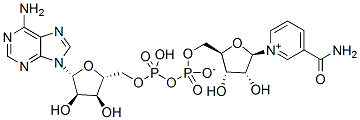 indicate that SIRT6 plays an important role in maintaining normal retinal function. Altered methylation patterns and histone modifications have been identified in different ocular diseases like diabetic retinopathy, glaucoma and age-related macular degeneration. However, a comprehensively characterized epigenomic signature for any ocular disease remains elusive. Several questions arise: is there any epigenetic mark that would predict the onset or the progression of an ocular disease? Do epigenetic factors regulate other cellular pathwaysthat may alter visual function? Although epigenetic therapies have proven to be effective in cancer applications, the benefits of these approaches have not yet been applied for human ophthalmic diseases. Thus far, there is no structural information available for any protein component of the MtrCDE tripartite complex system. However, it has been reported that individual protein components of this tripartite system are able to interact with each other, suggesting that the tripartite MtrCDE pump is assembled in the form of MtrD3-MtrC6-MtrE3.
Given the importance of glucose availability for retinal function and the critical role of SIRT6
In the method developed here, proteins with different affinity of LZs localized to IBs were quantitatively analyzed in living cells using flow cytometry, while the E, K coil proteins in IB fractions was detected by electrophoretic methods after cell disruption in previous study. Therefore, the current method can be applied usefully for high throughput screening of PPI inhibitors, comparisons of interacting protein partners, and engineering binding affinities in bacterial cells. The mammalian retina is a highly metabolically active tissue and one of the most energy-consuming ones. It requires constant supply of blood glucose to sustain its function and its energy demand is normally met through the uptake of glucose and oxygen. Glucose movement across the blood�Cretinal barrier occurs mainly through the glucose transporter 1 and the need for glucose is evidenced by alterations in electroretinogramresponses and altered neurotransmitter release observed in hypoglycemic conditions. It has been shown that acute hypoglycemia decreases rod and cone vision, blurs central vision, and produces temporary central scotomas in humans. The consequence of sustained hypoglycemia on retinal function is less clear. Among many neuronal cellular events, action potential-mediated neuronal communication is believed to be a major process of energy consumption where energy cost comes mainly from postsynaptic receptor  activation. In the brain, most of the synaptic activity is mediated by glutamate, thus, the excitatory glutamatergic system represents the single largest energy user, consuming 50% of ATP in the brain. Photoreceptors convert light stimuli to electric impulses. Retinal ON bipolar cells receive direct glutamatergic input from photoreceptor cells. These cells exclusively express the class III G0-coupled type 6 metabotropic glutamate receptoras their primary postsynaptic glutamate receptor. Activation of mGluR6 initiates an intracellular signaling cascade ultimately leading to closure of cGMP gated cation channels and cell hyperpolarization. Thus, energy requirement and consumption in the retina changes greatly according to neuronal activity. Sirtuins are an evolutionarily conserved family of NAD + dependent deacylases that have been involved in many cellular responses to stress, including Evodiamine chromatin modifications, genomic stability, metabolism, inflammation, cellular senescence and organismal lifespan. In mammals, 7 sirtuin isoforms have been described that differ in their Kaempferide subcellular localization and substrates. It is currently accepted that sirtuins are crucial regulators of energy metabolism, likely through sensing changes in levels of intracellular NAD+. Among the members of this family of proteins, SIRT6 appears to have particular significance in regulating metabolism, DNA repair and lifespan. SIRT6 knockout mice appear normal at birth, but they rapidly develop a degenerative process that includes loss of subcutaneous fat, lymphopenia, osteopenia, and acute onset of hypoglycemia, leading to death in less than one month of age. Recently, Zhong et al. demonstrated that the lethal hypoglycemia exhibited by SIRT6 deficient mice is caused by an increased in glucose uptake in muscle and brown adipose tissue. At a molecular level, SIRT6 functions as a histone H3K9 and H3K56 deacetylase to control glucose homeostasis by inhibiting multiple glycolytic genes, including GLUT1, and by co-repressing Hif1a, a critical regulator of nutrient stress responses.