Lauroyl-L-carnitine (AbMole, M58111) is a medium-to-long-chain acylcarnitine that plays complex and critical roles in cellular metabolism and signal transduction. Metabolically, Lauroyl-L-carnitine serves as an activated carrier of lauric acid (C12 fatty acid), shuttling lauroyl groups from the cytoplasm across the inner mitochondrial membrane into the mitochondrial matrix for β-oxidation to fuel cellular activities[1]. This mechanism is fundamental for maintaining cellular energy homeostasis. When fatty acid oxidation is impaired or this molecule abnormally accumulates, it transitions from a simple metabolic intermediate into a biologically active signaling molecule. Studies show that Lauroyl-L-carnitine’s biological activity is primarily mediated through modulation of specific ion channels. It is an agonist of the transient receptor potential ankyrin 1 (TRPA1) channel, whose activation is linked to calcium influx and subsequent calmodulin-mediated pathways [2]. Additionally, abnormally elevated Lauroyl-L-carnitine induces mitochondrial dysfunction [2]. Lauroyl-L-carnitine has also been confirmed as a ligand for the G protein-coupled receptor GPR84, involved in regulating inflammation-related signaling pathways[3]. In experimental design, Lauroyl-L-carnitine serves as an important tool for probing metabolic networks and cellular stress responses. On the other hand, in animal studies, Lauroyl-L-carnitine reduces solution surface tension, enhancing the dissolution and diffusion of compounds and bioactive molecules in the gastrointestinal tract, thereby promoting their absorption. The mechanism is twofold: first, its amphiphilic structure (hydrophobic lauroyl chain + hydrophilic carnitine head group) allows it to form micelles in aqueous solutions and encapsulate hydrophobic bioactive molecules; second, Lauroyl-L-carnitine binds to the carnitine transporter OCTN2 on intestinal epithelial cells, facilitating targeted absorption of nanoparticles [4]. Compared with synthetic surfactants, Lauroyl-L-carnitine, as an endogenous metabolite, offers better biosafety. In 2014, two inhibitors from AbMole were used in in vivo studies by the Spanish National Center for Cardiovascular Research (CNIC) and Columbia University, leading to publications in Nature and Nature Medicine.
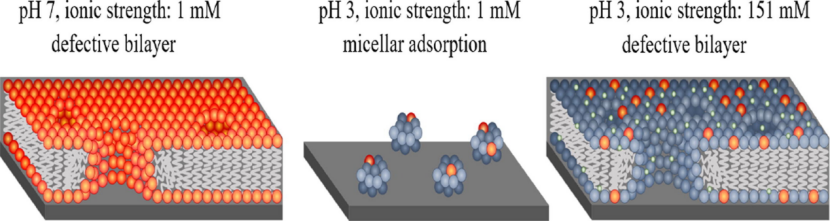
Figure 4. Micelle formation of Lauroyl-L-carnitine in buffers at different pH [5]
References and Acknowledgments
[1] M. Sisi, L. Yong, Q. Lixing, et al., L-carnitine: new perspectives on the management of preterm infants, Frontiers in nutrition 12 (2025) 1508441.
[2] H. Turk, S. Erdal, R. Dumlupinar, Exogenous carnitine application augments transport of fatty acids into mitochondria and stimulates mitochondrial respiration in maize seedlings grown under normal and cold conditions, Cryobiology 91 (2019) 97-103.
[3] H. Liu, X. Hu, Z. Li, et al., Surface adsorption and solution aggregation of a novel lauroyl-l-carnitine surfactant, Journal of colloid and interface science 591 (2021) 106-114.
[4] L. Kou, R. Sun, S. Xiao, et al., OCTN2-targeted nanoparticles for oral delivery of paclitaxel: differential impact of the polyethylene glycol linker size on drug delivery in vitro, in situ, and in vivo, Drug delivery 27(1) (2020) 170-179.
[5] Huayang Liu, Ke Fa, Xuzhi Hu, et al., Structural features of interfacially adsorbed acyl-l-carnitines, 623 (2022) 368-377.