Observation that CD36 may regulate downstream signalling in enterocytes and stimulate chylomicron synthesis supports this 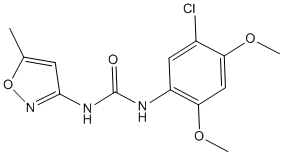 hypothesis. This concept is however questioned by the consistent observation that CD36 gene deletion does not affect plasma TG concentration, LCFA uptake and TG re-esterification in mouse proximal intestine and that postprandial plasma TG concentration is increased in CD36 deficient humans. Therefore, the direct role of CD36 in the intestinal absorption of FA and its pathological hyperlipemia consequence remains an open question. In addition to its potential implication in atherosclerosis and dyslipidaemia, independent studies have suggested that CD36 may also be directly or indirectly involved in diabetes. CD36 deficient humans were reported to have insulin resistance. CD36 gene knock out, however, did not induce insulin resistance in mice. Rather, insulin sensitivity was increased in CD362/2 skeletal muscle. Furthermore, defective insulin signalling was shown to be associated with increased CD36 expression in macrophages. In addition, ox-LDL produced a dramatic reduction of Glyceraldehyde-3-phosphate deshydrogenase in smooth muscle cells resulting in a marked reduction of glucose usage. Together, these observations suggest that CD36 is inversely correlated with insulin sensitivity and plasma lipoproteins. In contrast, animals over expressing CD36 in muscle exhibited decreased plasma concentrations of triglycerides and increased plasma insulin and glucose concentrations and CD36 deficiency induced insulin resistance in the liver of these animals. Therefore, opinions concerning a direct or indirect role of CD36 in insulin resistance and the development of type II GDC-0879 diabetes are diverging. In summary, the preponderance of evidence suggests that CD36 is a central receptor for the detection, accumulation and metabolism of lipids and fatty acids in different cells and tissues. CD36 could then function as a molecular bridge between the development of dyslipidaemia and insulin resistance. If so, it may represent an interesting therapeutic target for the treatment of atherosclerosis, type II diabetes and obesity and their associated cardiovascular diseases. In support with that hypothesis, we show that small molecules with anti-CD36 activity can reduce postprandial hyperlipidaemia and protect against type II diabetes and atherosclerosis. In the present study, correlation between the anti-CD36 Y-27632 inhibitor activity of small molecular weight chemicals and the known pathophysiological activity of this scavenger receptor were established. Although different mechanisms may be involved in the oral versus IP activity of these inhibitors, both administrations were able to improve the metabolic profile of defined and independent rodent models. A significant reduction of the plasma concentration of triglycerides and a better glucose usage were observed at pharmacological doses with a concomitant reduction of the atherosclerotic and diabetic consequences of these attributes. CD36 is a well characterized FA translocase and an oxidized LDL receptor expressed in many cell types including macrophages, adipocytes, endothelial cells and enterocytes. Expression of this gene is ligand-binding dependent and can either be up or down regulated. For instance, ox-LDL-CD36 interaction up regulates a PPARc-dependent CD36 gene expression in monocytes-macrophages whereas interaction with FA down regulates gene expression and protein synthesis in enterocytes, but can up regulate the gene in adipocytes. In addition, CD36 may or may not be associated with companion molecules.